WHAT IS DIABLO IV?
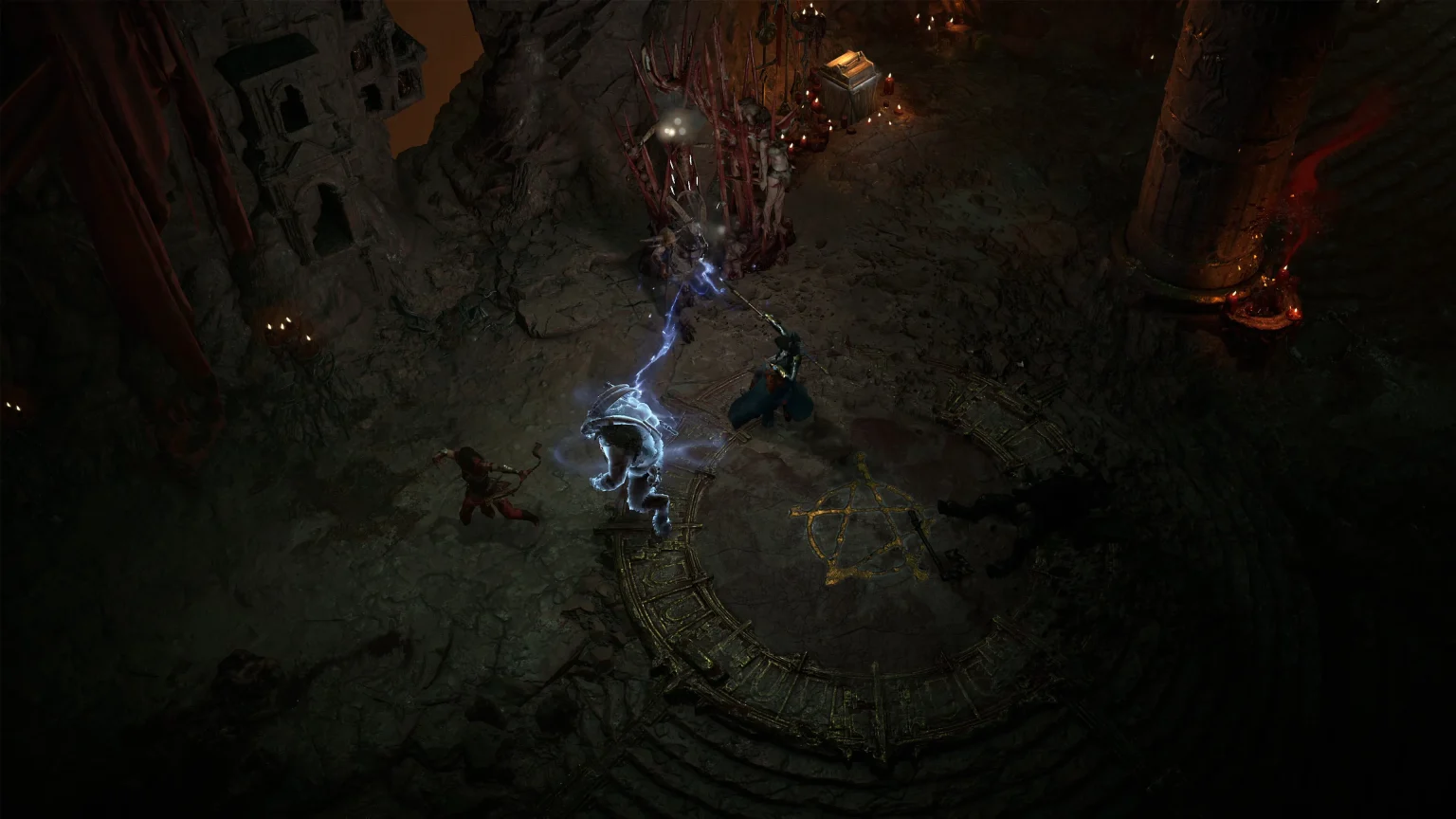
Diablo IV is Blizzard’s fourth mainline entry in the franchise — a live-service, isometric action RPG set in the corrupted dark-fantasy world of Sanctuary, where you build and iterate on increasingly powerful characters across a seasonal loop of new content, class tuning, and endgame activities. With Lord of Hatred, the game now spans two full expansions, a ten-class roster including the newly added Paladin and Warlock, and more systemic depth than the version that launched in 2023 has any right to suggest. Players who need an offline ARPG, a permanent character they can invest in without seasonal resets, or a game with a satisfying narrative endpoint should look elsewhere — D4’s design philosophy is explicitly built around the seasonal loop, not around a fixed campaign you play through and own completely.
FIRST IMPRESSIONS
The first thirty minutes of Diablo IV remain as striking in 2026 as they were at launch — the cinematic pre-rendered opening is Blizzard’s finest, and the transition into gameplay is immediate, disorienting, and deliberately oppressive in the best sense. If you start fresh as a Paladin in Lord of Hatred, the class introduction scene frames your character as both righteous and morally compromised before you’ve cast your first Blessed Hammer, which is excellent tonal shorthand. The hook arrives when the first Named item or Unique drops and you start mentally rewriting your build around it — that moment is the entire game in miniature.
GAMEPLAY & MECHANICS
The Diablo 4 builds ecosystem has never been deeper than it is in the Lord of Hatred era. The Paragon board, Aspect imprinting, Masterworking, Horadric Cube transmutation, and now Talisman Set bonuses create a layered customization architecture where two characters running the same class and skill tree can function completely differently at high gear scores. For players in India running with higher-than-average ping to US or EU servers, the best Diablo 4 build approach for high latency is to prioritize skills with generous animation windows and avoid builds that are dependent on sub-frame ability chaining — Blessed Hammer Paladin and Bone Spear Necromancer remain the community consensus for high-ping stability, while builds like Flurry Rogue and rapid-combo Barbarian variants suffer the most from latency-induced input desync. The one systemic issue that Season 12 didn’t resolve is that the seasonal mechanic — Kill Streak Massacre chains — doesn’t integrate cleanly with the broader endgame activity loop, which means players who pushed into Torment 4–5 content quickly ran out of thematically seasonal things to do within the first two weeks.
STORY & WORLD
The Diablo 4 campaign remains the best story arc the franchise has produced — a deliberate, character-driven crawl through Sanctuary’s deteriorating theology, culminating in a confrontation with Lilith that earns its emotional weight. Lord of Hatred continues the story into the Skovos Isles, pitting the player against Mephisto in a campaign that the early community consensus rates as a step above Vessel of Hatred’s narrative in focus and pacing. The Diablo 4 map in 2026 is enormous: Fractured Peaks, Scosglen, Kehjistan, Hawezar, Dry Steppes, Nahantu (Vessel of Hatred), and now the Skovos Isles — each region is visually distinct, densely populated with environmental storytelling, and worth exploring on foot at least once.
VISUALS, AUDIO & PERFORMANCE
The art direction in Diablo IV is the most consistent quality the game delivers regardless of which season you’re playing in — the Skovos Isles in Lord of Hatred introduces a coastal Mediterranean-meets-corrupted-tropics biome that contrasts beautifully against the frost and decay of earlier zones. Sound design is exceptional at the individual combat level; the Paladin’s Judgment and Blessed Hammer have distinct tactile audio feedback that makes the class feel physically different from the Barbarian even at identical frame rates. Performance on Xbox Series X, PS5, and high-end PC is stable at 60fps in the vast majority of content; Torment 4–5 boss encounters with four players and heavy particle AOE can dip on base-gen hardware and older PC configurations, but no regression was introduced in the Season 12 or Lord of Hatred patches.
MONETISATION & VALUE
For Indian players, the value calculation in 2026 depends almost entirely on your platform. The base game is included with Xbox Game Pass, which is available in India across Game Pass Core, PC Game Pass, and Game Pass Ultimate tiers — making the core Diablo IV experience available to Indian players at the subscription’s monthly cost without a separate purchase. The Lord of Hatred expansion is not included in Game Pass and must be purchased separately; the lowest verified price for the Standard Edition in India at time of writing sits at approximately ₹2,800–₹3,500 via third-party Steam key resellers, compared to the full Battle.net price of $39.99 USD. The Battle Pass adds a cosmetic-only seasonal track available for Platinum currency; it does not affect power. The Platinum shop, however, sells cosmetics at prices that sit uncomfortably high relative to INR purchasing power — ₹8,325 for a 11,500 Platinum bundle, which converts to approximately three to four premium cosmetic sets.
ACCESSIBILITY
Diablo IV ships with subtitles in multiple languages including a localized Indian English text option, full Torment difficulty scaling that allows players to calibrate challenge without gating story content, and colorblind-friendly UI color profiles. The loot filter — introduced natively with Lord of Hatred and free for all players including those who haven’t purchased the expansion — is accessed through Options > Gameplay > Loot Filters. You can set up to 25 rules per filter using ten condition types including item rarity, Greater Affix count, specific affixes, item type, and Codex upgrade status. Filters are shareable via export codes, and community-built filters for each class are available on Mobalytics and third-party sites within hours of each major patch. To set up your D4 loot filter in 2026: enable the shortcut in Gameplay options, create a baseline “Show All” rule first, layer “Hide All” beneath it for Magic/Rare/Legendary, then add exception rules above the Hide rule for Greater Affixes, Codex upgrades, and your class’s priority affixes — rule order in the left column is load priority, top-down.
MULTIPLAYER & COMMUNITY
Cross-play is enabled by default and works cleanly across PC, PlayStation, and Xbox with no meaningful input friction for co-op parties. The Dark Citadel — D4’s closest equivalent to a raid — requires coordinated group play and represents the hardest PvE content in the game, designed around two-party synchronization across parallel dungeon lanes. The Diablo 4 community in India is active primarily on Discord servers and the r/diablo4 subreddit; the Indian server ecosystem benefits from Game Pass availability driving a broader casual playerbase, though dedicated Indian-language community channels are limited compared to the English-language spaces.
HOW IT COMPARES
Against Path of Exile 2, the Diablo 4 vs Path of Exile 2 India 2026 debate is ultimately a platform and accessibility question: D4 wins on approachability, console-first design, art direction clarity, and latency tolerance for high-ping Indian players — but PoE2’s passive skill web and itemization depth are a different category of complexity entirely, and free-to-play Indian players get far more mechanical content per rupee in PoE2.
Against Last Epoch, Diablo IV wins on production value, narrative quality, and multiplayer infrastructure — but Last Epoch wins decisively on offline support, permanent character progression that survives seasonal resets, and loot filter granularity that D4’s native system is only now beginning to approach.